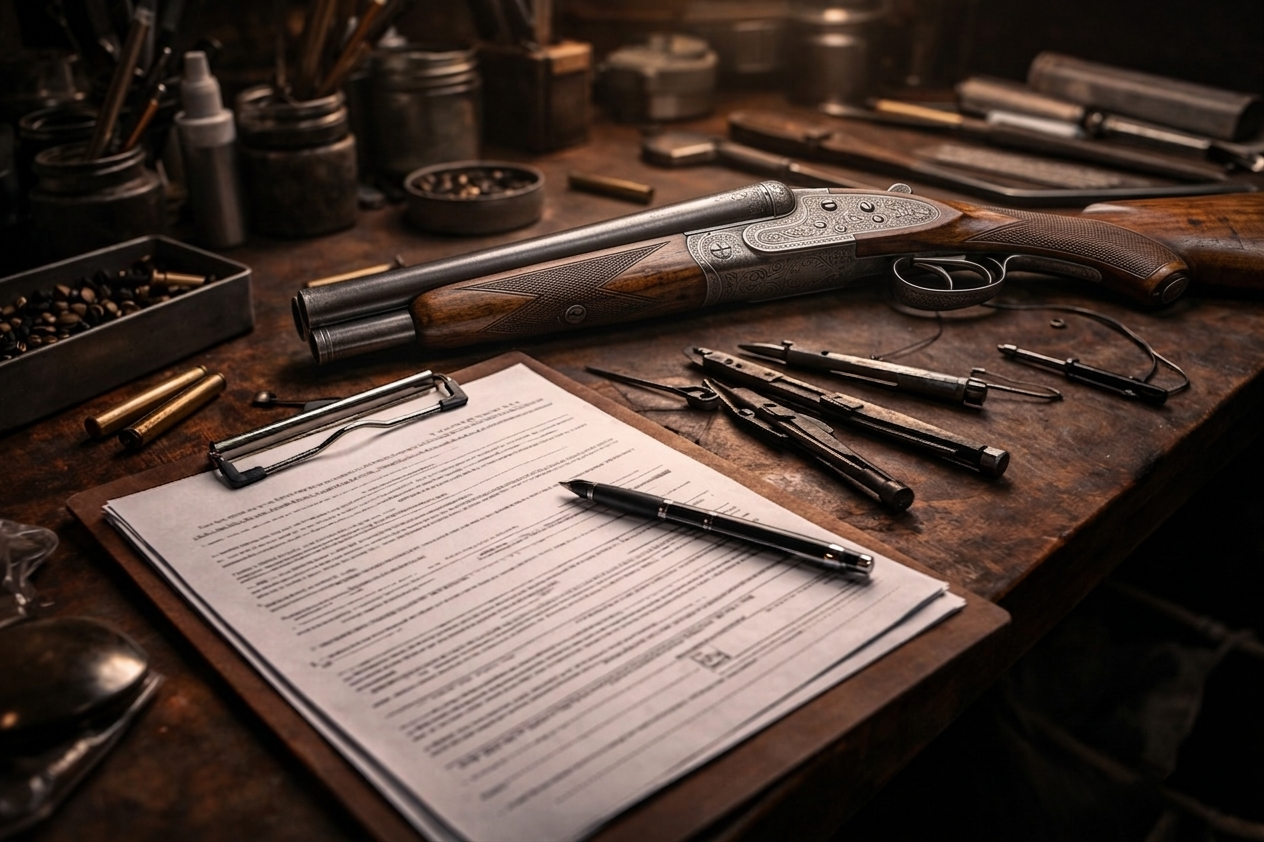
I have an unusual professional background. I’m a lawyer who practices in tax and corporate law, and I’m also a gunsmith and firearm appraiser. I have represented several firearm manufacturers, gun ranges, and retailers, and my legal training gives me a clear view of how quickly things can go sideways when documentation is inadequate and expectations aren’t managed properly.
Interestingly, the biggest risks in gunsmithing rarely come from tools or techniques; they come from unclear expectations, undocumented decisions, and weak paperwork.
Let me share what I’ve learned from straddling both worlds. Not as your attorney, I’m not, and this isn’t legal advice for your specific situation, but as someone who understands both the technical work and the legal framework surrounding it. This article will help gunsmiths reduce risk, communicate clearly, and avoid preventable disputes.
“The biggest risks in gunsmithing rarely come from tools or techniques; they come from unclear expectations, undocumented decisions, and weak paperwork.”
THE SCENARIO THAT EXPLAINS A LOT
A customer walks into your shop with his grandfather’s shotgun. Beautiful piece. He wants the trigger lightened. You quote $125, promise one week as it appears to be a straightforward trigger job. You begin disassembly and there it is.
The action is literally cracked in a way that can’t be TIG or even laser-welded. Compounding the problem are internal components worn to dangerous levels. This firearm is quite unsafe to fire. You cannot ethically return it in this condition, let alone perform trigger work that might further compromise an already dangerous situation. Also, you didn’t quote him $500 for a complete rebuild, and he didn’t authorize extensive repairs.
What options do you realistically have?
Without the proper language in your work order, every option creates differing levels of liability. Return it unfixed, and you might face accusations of holding repairing it hostage for an upgrade in pricing. Repair it without authorization, and you’re performing unauthorized work. Return it as-is after discovering the defect, and when someone gets injured? Welcome to Defendant Town, population you.
This nightmare scenario happens because some gunsmiths think a handshake and a parts receipt constitute adequate documentation. I’m writing this article to illustrate how gunsmiths must rethink documentation in today’s regulatory environment and over-litigated times.
THREE COMMON SOURCES OF LIABILITY
From my experience, gunsmiths create risk exposure in three primary ways: overpromising on timelines, being vague about warranties, and making performance guarantees they cannot reasonably keep.
Timeline Over-Optimism
Timeline expectations matter more than most people realize. Tell someone one week and deliver in two, they’re dissatisfied. They start scrutinizing your work. That trigger that always had some grit suddenly becomes your fault because you made them wait. Tell them two weeks and finish in one? You’re a professional. Same work, different expectations.
Under-promise and over-deliver. Optimism in timelines sets you up for problems. Dissatisfied customers look for reasons to complain, and complaints can escalate into claims. A happy customer tells two people; an unhappy one tells twenty.
Vague Warranties
Warranties are worse because most gunsmiths never clarify what they’re actually promising. Are you guaranteeing your work for the life of the firearm? One year? Only against defects in your workmanship? What about parts? Few smaller businesses address these questions until there’s a dispute.
Dangerous Performance Guarantees
Performance guarantees are particularly dangerous. Don’t promise specific accuracy, reliability with all ammunition types, or any other measurable outcome unless you’re prepared to stake your business on it. Too many variables exist beyond your control: the shooter’s technique, ammunition quality, maintenance practices, and environmental factors.
Be realistic about what you can actually deliver. You’re staking your reputation and livelihood on it.
ESSENTIAL ELEMENTS OF INITIAL DOCUMENTATION
I won’t prescribe exact language for your work orders. That requires consultation with an attorney in your jurisdiction who understands your specific business.
A good work order should include:
- Scope of work
- Authorization limits
- Safety discovery protocol
- Diagnostic fees
- Timeline disclaimers
- Warranty boundaries
- Refusal-of-unsafe-work language
What follows is what I consider when taking in firearms for service.
Customers need to understand that you may discover defects not visible during initial inspection. Acknowledging this upfront prevents disputes later.
You need clear authority to stop work if you discover safety issues. Otherwise, you’re trapped between performing unauthorized repairs or returning an unsafe firearm after you’ve identified the problem.
Your time has value regardless of whether the repair proceeds to completion. If work stops due to safety concerns or customer decision, compensation for diagnostic time should be established upfront.
Timelines should explicitly be estimates subject to parts availability and unforeseen complications. Suppliers miss deadlines constantly. Build in that flexibility.
Make clear that you will not perform modifications that compromise safety. Some customer requests are simply imprudent, and you should have documented authority to refuse them.
One more critical point: include your LLC designation every single time you reference your business name. On invoices, emails, quotes, signage, everywhere. This consistency matters significantly for maintaining your liability protection.
EFFECTIVE DISCLAIMER PLACEMENT AND FORMAT
A disclaimer buried on page seven of a 10-page, six-month-old contract provides limited protection. Courts routinely find such disclaimers inconspicuous and therefore unenforceable.
Effective disclaimers must be omnipresent and visible. This means appearing at the bottom of emails, on receipts, on visible shop signage, and referenced on every document customers receive. Standard language can simply state: “See original service agreement for complete terms and conditions.”
But visibility alone is insufficient. Disclaimers must be conspicuous under legal standards. This requires setting them apart through different font sizes, bold typeface, contrasting colors, or capital letters for headings. The legal test asks whether a reasonable person would notice it — if it blends with surrounding text, it’s in danger of not being conspicuous.
I’m not guaranteeing this will protect you in every situation. I’m explaining what courts examine when determining if your disclaimer has legal effect.
LIMITATIONS OF WAIVERS AND DISCLAIMERS
Even perfectly drafted waivers and disclaimers won’t protect against everything.
You remain liable for gross negligence, willful misconduct, fraud, and statutory violations. Gross negligence can include working on firearms beyond your competence. Willful misconduct covers ignoring known safety issues. No waiver can excuse violations of federal or state firearms regulations.
In some jurisdictions, you cannot effectively disclaim liability for your own ordinary negligence. Waivers may help with nuisance claims or unreasonable customer complaints, but they don’t substitute for competent, ethical work.
This is why the quality of your service matters fundamentally. Perform competent work and decline jobs beyond your expertise. Be honest about your findings. Proper documentation supports good practices but doesn’t replace them.
RECORD RETENTION AND DOCUMENTATION
Document customer interactions with brief notes: date, time, discussion topics, quotes provided, and specific requests. These records prove invaluable when someone claims you promised something you didn’t.
Learn to decline inappropriate work. If a customer requests unsafe modifications or results you cannot guarantee, refuse the job. No fee justifies the liability of negligent work.
Understand record retention requirements. ATF regulations changed in 2022. Form 4473s must now be retained for the duration of your FFL status, not just 20 years. For repair work, any firearm held overnight requires complete documentation.
Federal requirements establish the minimum. State statutes of limitations for injury claims vary from two to four years, with statutes of repose potentially extending 10 to 15 years. Retain records longer than the minimum requirements. Storage costs little; litigation costs a lot.
IMMEDIATE STEPS FORWARD
If you’re operating without adequate protections, start here. A gunsmith reduces legal exposure by:
- Managing expectations in writing, not verbally.
- Documenting every customer interaction.
- Avoiding promises about accuracy or performance.
- Maintaining visible, consistent disclaimers.
- Having clear authority to stop work when safety issues appear.
- Retaining records longer than legally required.
Improve customer communication practices and stop making promises you cannot guarantee. Begin documenting conversations where you are setting realistic expectations.
Implement proper intake documentation on every customer and every job. Your paperwork doesn’t need perfection immediately, but it needs to exist and provide basic protection.
You won’t correct everything overnight. But starting now beats starting after litigation begins.
FINAL THOUGHTS
I cannot prescribe exactly how much protection your specific operation requires. That depends on risk tolerance, customer base, work volume, service types, and numerous other factors unique to your business.
The critical element is making informed decisions. Understanding actual risks rather than hoping problems never materialize.
That grandfather’s shotgun scenario happens somewhere every week. Shops that handle it well generally plan for it beforehand. They have appropriate language in their work orders, established processes for notifying customers about safety issues, and comprehensive documentation practices.
Shops that handle it poorly improvise solutions while holding someone’s family heirloom. Improvising legal strategy in real-time rarely succeeds. Plan ahead. Consult an attorney in your jurisdiction. Develop proper documentation and do it consistently.
It’s not why anyone becomes a gunsmith. But it’s essential for operating a business that services items capable of causing serious injury if something goes wrong.
That’s just the reality of this profession.
If you’d like to see something in this column, let me know. If you want to see what I use, drop me an email and I’ll forward it to you.| seth@yourcleardefense.com
Important disclaimers: This article provides general information based on the author’s professional experience, not legal advice for your specific circumstances. Laws vary significantly by jurisdiction. What applies in one state may not apply in another. For actual legal guidance, retain an attorney licensed in your jurisdiction with expertise in firearms and business law. Reading this article does not create an attorney-client relationship. Consult qualified legal counsel for your particular situation